
Book an appointment
Verify your phone number below to get started.
Thank you! Your submission has been received!
Oops! Something went wrong while submitting the form.
Verify your phone number below to get started.
Two to five years for professional work, one to two for a DIY kit, three to six months for a spray. What actually determines which end you land on.


A professional ceramic coating lasts two to five years. A consumer DIY kit lasts one to two. A spray-on ceramic product lasts three to six months. Where you land inside those ranges depends far more on how the car is washed than on which coating went on.
Applied by an installer over corrected paint, usually in multiple layers. Entry-grade products sit at the two-year end; premium multi-layer applications with a warranty reach five and occasionally beyond. The gap between two and five years is mostly layer count, product grade and how well the paint was prepared.
The chemistry in consumer kits is genuinely good. What differs is the environment and the prep — a controlled shop with proper lighting catches high spots that a driveway does not. Expect roughly half the life of professional work, which is still a reasonable return on $50 to $150.
These are maintenance toppers, not coatings, whatever the label says. They are genuinely useful for extending a real coating or holding a car over between details. They are not a substitute.
Coatings do not stop abruptly; they fade. The first sign is water behaviour — instead of beading tightly and rolling off, water starts to sheet and sit. Dirt begins clinging where it used to release, and the car needs washing more often to look the same. Once the hydrophobic effect has clearly gone, the protective layer is largely spent even if the paint still looks reasonable.
Many multi-year warranties carry conditions — documented annual inspections or maintenance washes at the installing shop. That is not a scam, but read what you are agreeing to before assuming a five-year warranty means five years of unconditional cover.
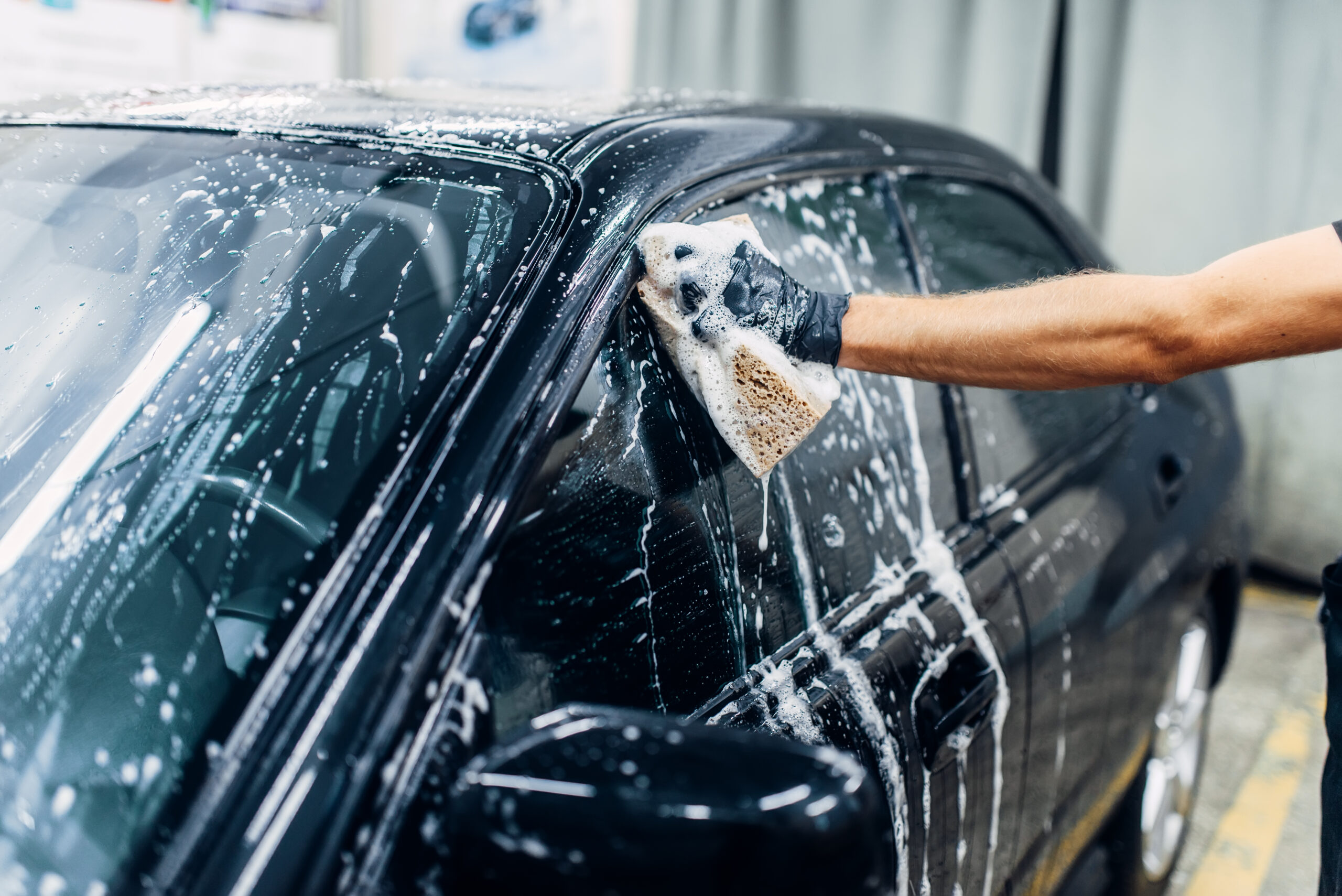
For most people the practical routine is a proper hand wash every two to four weeks, a ceramic-safe topper two or three times a year, and an inspection at the twelve-month mark.
Thinking about whether to get one at all? See whether ceramic coating is worth it, or the cost guide for what a quote should include. We install and maintain coatings throughout Austin, Dallas and Houston.